
Drywall Installation in Denver CO – Paint-Ready Walls & Ceilings for Your Remodel
Denver drywall has one hard-and-fast rule: nothing gets covered until the work behind it passes inspection. Electrical, plumbing, and insulation must clear rough-in before a single sheet goes up. Denver Basement Finishing Pros pulls the permits and lines up those inspections first, so your walls are closed only after everything behind them is signed off to code. After that, our crews hang, tape, mud, sand, and texture your new drywall to a smooth, paint-ready finish built for Colorado’s dry air. Ready to begin? Get a Free Estimate · Call 303-900-4120.

Licensed & Insured
Your project is protected from start to finish.

EXPERIENCED PROS
Skilled, background-checked professionals.

QUALITY MATERIALS
We use top-quality products that last.

SATISFACTION GUARANTEED
We’re not happy until you are.
Why Denver Homeowners Choose Denver Basement Finishing Pros First
Denver’s Most Trusted Basement Finishing & Remodeling Pros. When drywall is one phase in a project you’ll live with for years, the team doing the work matters more than the board itself. Here’s why homeowners across the metro come to us first. Get a Free Estimate · Call 303-900-4120.
Over 10 Years of Local Experience
More than a decade delivering custom, luxury basement finishes and complete remodels. Our finishers have hung and finished drywall in Denver-area homes long enough to understand how this climate treats a wall over time — not just how it looks the day the mud dries.
Licensed & Insured for Your Protection
We’re licensed and insured. We carry worker’s compensation and general liability insurance to safeguard our customers and their property, so the work behind your walls is handled by a team that stands behind it.
Satisfaction Guaranteed
We back our craftsmanship with a satisfaction guarantee. We want you happy with the end result, and we’ll do what it takes to make that happen.
Locally Owned, Community-Trusted
We’re locally owned, with deep ties to the community and a clear read on which contractors earn trust. In Denver, homeowners still hire by referral and word of mouth — a reputation we protect on every job.
Drywall Installation in Denver CO as Part of Your Larger Project
Drywall is almost never a standalone task. It’s one step inside a larger build: a basement finish, a home addition or room addition, a kitchen remodel, a bathroom remodel, or a whole-home remodel. We treat it that way, because how drywall ties into the surrounding work is what makes the finished space feel right.
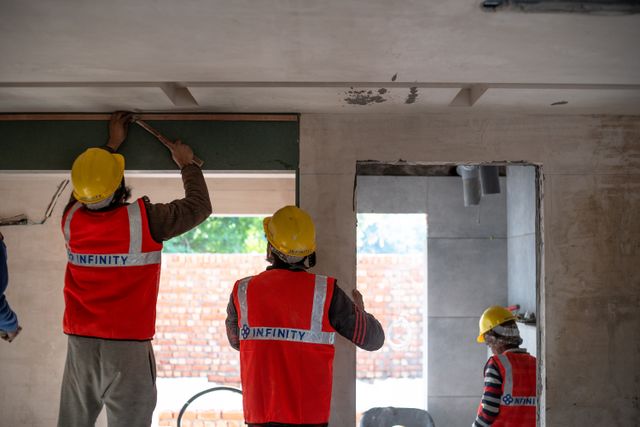
Our busiest category is basement drywall and basement ceilings. In a basement finish, drywall turns open framing and exposed joists into true living space — walls you can paint and a ceiling that reads like a finished room instead of a mechanical zone.
Order matters. Drywall only goes up after framing is square and insulation plus the rough-in trades are complete. Those earlier steps have their own pages; the point here is that drywall comes near the end, not the beginning.
This page focuses on new drywall for remodels, additions, and finishing projects. It’s not a repair page — we’re not the stop for patching a hole, chasing nail pops, or fixing water damage on an otherwise finished wall. If that’s the need, the quickest route is a short call. Call 303-900-4120.
We also complete drywall for office buildouts and commercial remodeling, but this page stays centered on residential work, where luxury finishes and everyday comfort are the goal.
What Professional Drywall Installation in Denver CO Includes
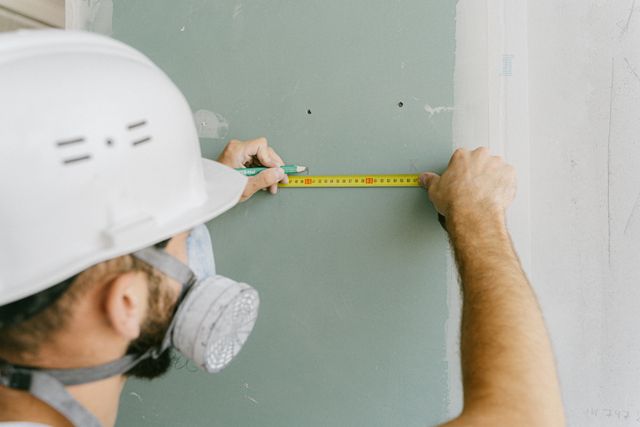
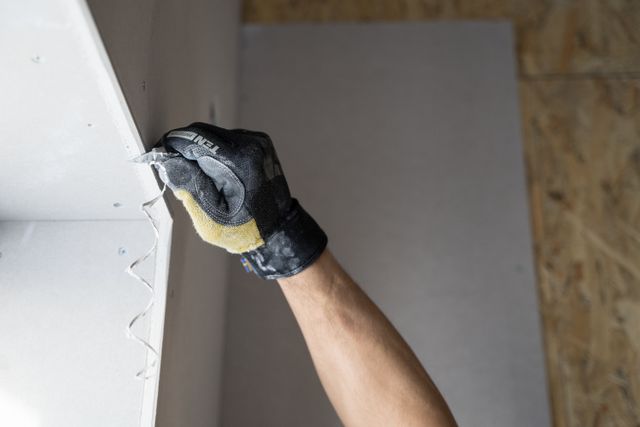
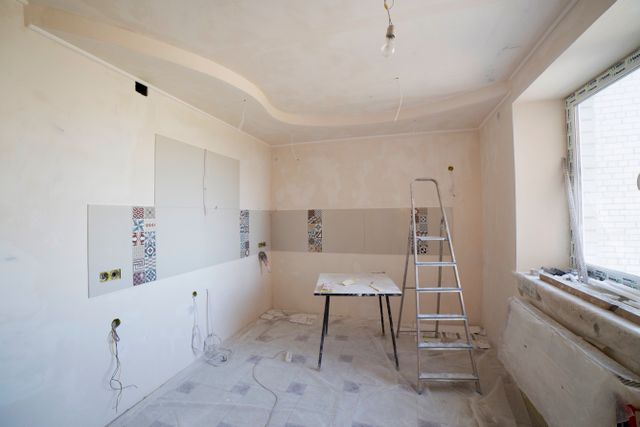
When we say “drywall installation,” we mean the full scope so expectations are clear. Our crews hang the board, tape the seams, apply and smooth multiple coats of joint compound (mud), sand it flat, and apply texture. The end result is a wall or ceiling finished to a smooth, paint-ready surface.
That’s where our role ends by design. Drywall installation delivers a paint-ready surface; the painting, trim, and crown molding are a separate finishing-touches phase. Keeping stages distinct keeps the job organized and lets you see exactly what each price and timeline cover.
Not every wall gets the same board. In wet areas like bathrooms — and in basements when conditions call for it — we install moisture-resistant board instead of standard drywall so the surface holds up where humidity and dampness play a role.
Ceilings require a choice, too. A drywalled ceiling gives a finished, uninterrupted look a drop or acoustic ceiling can’t match. The trade-off with a drop ceiling is easier access to utilities above — so when we drywall a ceiling, we include access panels wherever plumbing valves, cleanouts, or junctions must stay reachable. You get the clean look without losing access.
Now the straight talk homeowners ask for. Hanging drywall is within reach for a hands-on owner. Taping, mudding, and sanding it to a flawless finish isn’t — especially under Denver’s bright natural light, which highlights every ridge and lap mark. The finish, not the hanging, is what separates a professional job from a lumpy DIY one. Costs change with scope and materials, and we’ll explain what drives them. When you want that perfect finish handled for you, Get a Free Estimate.
Why Drywall Behaves Differently in Colorado
Drywall doesn’t perform the same in every climate, and Denver proves it. Our low-humidity air pulls moisture from joint compound and tape over time, so they shrink and separate at the seams — that’s joint separation. That same dry air shrinks the framing behind the wall, loosening fasteners and causing nail pops. Cracking is the most common local drywall complaint, linked to normal home settling and Denver’s frequent temperature swings.
That’s why “finishing” is real local expertise, not a buzzword. Working with these drying conditions means proper mud buildup, letting each coat cure instead of rushing, and choosing a texture that hides normal movement. Done right, that’s how you avoid the joint separation and cracking many homeowners see a year or two after a hurried job.
Here’s the honest part competitors skip. The Front Range sits on expansive bentonite clay that swells when wet and shrinks when dry, putting pressure on foundations and basement walls. Diagonal cracks near windows and doors can signal foundation movement — not bad drywall. Because basement drywall is closest to that movement, it’s often where the first sign appears. A contractor you can trust will tell you the difference instead of quietly mudding it over, and that’s exactly the insider read we bring. Choosing Drywall Installation in Denver CO from a team that understands local soil conditions is the difference between a wall that holds and one that keeps cracking.
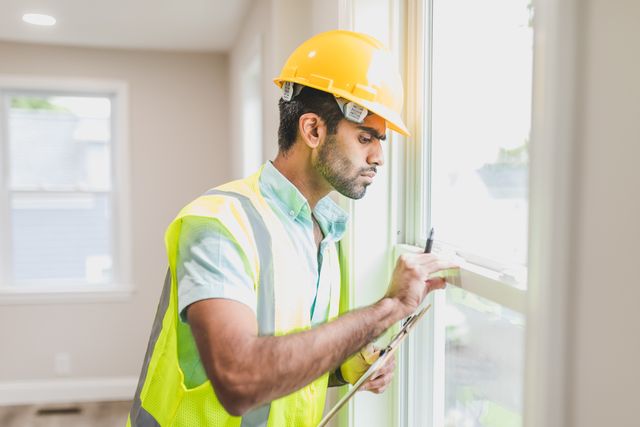
Permits & the “Before You Cover” Inspection Rule in Denver CO
Here’s a Colorado rule that surprises homeowners: electrical and plumbing work must be inspected “prior to covering, i.e. insulation, drywall, etc.” Drywall is legally the last thing to go up, gated by rough-in inspections that must pass first. You can read the state’s requirement on the Colorado electrical and plumbing permit information pages.
It’s also a quiet test of trust. A contractor who hangs drywall before those rough-in inspections is cutting corners and hiding work a city inspector never saw. Doing it by code protects you. That’s why our Step 3 is permitting and construction — we manage all permitting and schedule those inspections before a single sheet goes up.
Permit authority depends on your address. In the city, the City & County of Denver, Community Planning and Development handles building permits and inspections. Other service-area cities use their own building departments — for example Jefferson County for Arvada, Wheat Ridge, and Lakewood, Arapahoe County for Highlands Ranch and Aurora, and Adams County for the north-metro communities.
Homeowners often underestimate this gate. Approvals take real time when a project follows code, and we won’t rush the inspection sequence. We’ll set honest expectations up front so permit and inspection timelines don’t blindside you mid-project. Every permit we pull for Drywall Installation in Denver CO is managed start to finish by our team, so you never have to chase a city department on your own.
Where We Install Drywall Across the Denver Area
We install drywall across all nine of our service areas: Denver, Highlands Ranch, Cherry Creek, Arvada, Broomfield, Westminster, Lakewood, Wheat Ridge, and Aurora. Homeowners in every one of those communities can count on the same standard of Drywall Installation in Denver CO — licensed crews, proper permits, and a paint-ready finish that holds up in Colorado’s climate.
We drywall in every setting a remodel calls for — basements, home additions and room additions, kitchens, baths, and whole-home projects. Each has its own page; drywall is one stage inside each.
Being locally owned with deep community ties isn’t a slogan for us — it’s how clients found us to begin with. Denver homeowners hire on referral, and we’ve earned ours one finished project at a time.
Wondering if we cover your neighborhood? Call 303-900-4120 and we’ll tell you straight.
Here’s the honest part competitors skip. The Front Range sits on expansive bentonite clay that swells when wet and shrinks when dry, putting pressure on foundations and basement walls. Diagonal cracks near windows and doors can signal foundation movement — not bad drywall. Because basement drywall is closest to that movement, it’s often where the first sign appears. A contractor you can trust will tell you the difference instead of quietly mudding it over, and that’s exactly the insider read we bring. Choosing Drywall Installation in Denver CO from a team that understands local soil conditions is the difference between a wall that holds and one that keeps cracking.
Our Drywall Installation Process
Every project follows the same documented roadmap, so you always know where drywall fits.
Step 1 — Free Consultation.
A design specialist visits your home to discuss goals, budget, and timing.
Step 2 — Design Phase.
We create a 3D rendering of the finished space — cabinetry, flooring, lighting — so you can see the room before we build it.
Step 3 — Permitting & Construction.
We take care of permitting and schedule the rough-in inspections that must clear before anything gets covered.
Step 4 — Build.
Framing, drywall, flooring, and structural work happen here — drywall goes up in this stage once electrical, plumbing, and insulation have passed.
Step 5 — Finishing Touches.
Paint, trim, crown molding, and fixtures.
Step 6 — Final Walkthrough.
We walk the completed project with you to confirm you’re satisfied before we close it out.
Don’t Cover Your Walls Until It’s Done Right
Drywall is the point of no return. Once it’s up, everything behind it — wiring, plumbing, insulation, framing — is hidden. Getting the sequence right and the finish flawless the first time is the difference between a wall you forget and one you fight with for years.
You only get one shot to close those walls the right way. A smooth, paint-ready finish that holds up in Denver’s dry climate, installed by a licensed and insured, locally owned team that stands behind its work — that’s what you get when you start with a free consultation. If you’re comparing options, no other team brings the same combination of local knowledge and documented process to Drywall Installation in Denver CO. When you’re ready to talk it through, we’re a phone call away.
Get a Free Estimate · Call 303-900-4120.
Frequently Asked Questions
What’s included in professional drywall installation?
Professional drywall installation covers the full sequence: hanging the board on your walls and ceilings, then taping, mudding, sanding, and texturing to a smooth, paint-ready surface. That’s where drywall installation ends. Painting, trim, and crown molding come afterward as part of the separate finishing-touches phase of your project.
Do I need a permit for drywall in Denver?
In Denver, drywall itself follows the “before you cover” rule: your electrical, plumbing, and insulation work must pass rough-in inspection before any drywall goes up over it. That makes drywall legally one of the last things installed, gated by the inspections that come before it. We handle all permitting and schedule those inspections first, so your walls are covered only after the work behind them is approved by code.
Why does drywall crack in Colorado homes?
Colorado’s dry, low-humidity climate causes joint compound and tape to shrink over time, which can lead to joint separation and nail pops as framing contracts in the dry air. Diagonal cracks near windows and doors can also signal expansive-soil settling under the foundation rather than a drywall problem, and basement drywall sits closest to that movement. A trustworthy contractor tells you the difference instead of simply mudding over it.
Can I install drywall myself, or should I hire a pro?
Hanging drywall is doable for a hands-on homeowner, but the taping, mudding, and sanding are where amateur jobs tend to show. Getting to a flawless finish under Denver’s harsh natural light takes proper mud coats and cure time between them, and that finish is what separates a professional job. Costs vary with scope and materials.
What kind of drywall goes in a basement or bathroom?
Moisture-resistant board goes in wet areas like bathrooms and wherever basement conditions call for it. Because basement finishes are our highest-volume work, we choose the right board and texture for each space so your walls and ceilings hold up in Colorado’s conditions. A drywalled basement ceiling gives a finished, seamless look, with access panels handling any utilities that need to stay reachable.