
Insulation Installation in Denver CO – Warm, Dry, Code-Ready Basements from a Trusted Local Remodeler
In Denver’s Climate Zone 5B, the smart way to insulate a basement is a hybrid build: secure rigid foam board directly to the concrete foundation wall to create a continuous thermal break, then frame and insulate a stud cavity in front of it. The right materials and sequence depend on your exact wall conditions and making sure any bulk-water issues are handled first, which is why we plan the assembly during a free consultation and have it inspected before drywall hides the work. At Denver Basement Finishing Pros, we install insulation as a standalone scope or as a careful phase within a full basement finish—tailored for the cold, heating-heavy winters along the Front Range. To talk it through, call 303-900-4120 for a free consultation.

Licensed & Insured
Your project is protected from start to finish.

EXPERIENCED PROS
Skilled, background-checked professionals.

QUALITY MATERIALS
We use top-quality products that last.

SATISFACTION GUARANTEED
We’re not happy until you are.
Why Denver Homeowners Call Denver Basement Finishing Pros First
A Decade of Custom Colorado Basement Finishes
More than 10 years finishing custom, high-end basements and full remodels for Denver-area residents and Colorado mountain vacation homeowners means we’ve watched how insulation actually performs behind Denver basement walls, season after season. Insulation isn’t a line item to us. It’s the difference between a lower level that stays warm and dry and one that feels like a cold storage room. That experience shapes every assembly we recommend.
Licensed & Insured for Your Protection
We’re licensed, bonded, and insured for your protection. We carry worker’s compensation and general liability insurance to protect our customers and their property. That coverage matters most on the work you’ll never see again once drywall goes up, which is exactly why homeowners want a covered, accountable crew handling the wall cavity.
Insider Knowledge You Can Trust
Deep community ties and firsthand knowledge of which contractors are trustworthy give clients a dependable, high-quality experience start to finish. In insulation, that means straight guidance instead of a product-pushing upsell. We recommend the assembly that fits your wall, not the one with the highest ticket, and we’ll tell you plainly when a simpler approach is the right call.
Satisfaction Guaranteed
We’re confident enough in our work to back it with a satisfaction guarantee. Insulation Installation in Denver CO is work that gets sealed behind drywall and never seen again, so you get a Colorado crew that stands behind the finished result and treats your home with care. Licensed & Insured · Satisfaction Guaranteed · Free Consultation · Locally Owned.
Insulation Installation in Denver CO
Across the Denver area, we handle insulation as its own service or as part of a full basement build. If framing is already in, or you want only your basement, rim joists, or crawl space insulated to a solid standard, we can take on that exact scope.
Here’s the placement, plain and simple: insulation sits within Step 4, “Build: Framing, drywall, flooring, and all structural work.” It’s installed after framing and before drywall. A complete basement finishing always includes it, but if you only need insulation, we’ll do that as a standalone without the rest of the finish.
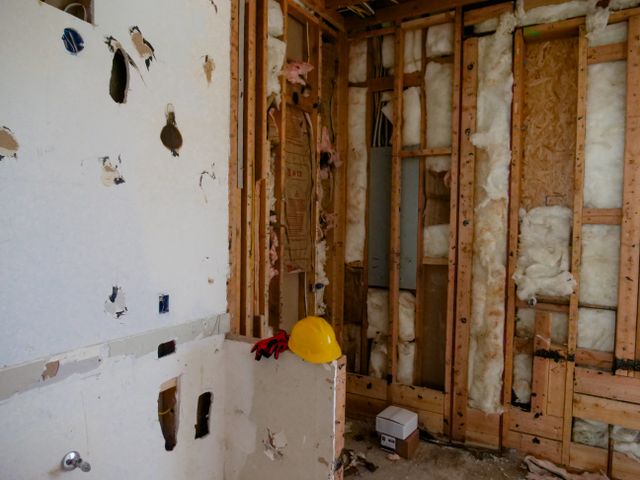
Denver sits in IECC Climate Zone 5 / 5B, a cool, heating-dominated climate with cold winters. In this zone, basement-wall insulation and air-sealing do the heavy lifting for comfort and code. Framing builds the cavity, insulation fills it, and drywall closes it in. Different trades handle those steps in sequence, and we treat each one with care.
Choosing the Right Insulation in Denver CO
There isn’t a single “best” insulation—only the right build for your wall. Here’s a vendor-neutral take on the four choices Denver homeowners ask about most.
Fiberglass batt is cost-effective and fills stud bays well when it’s installed carefully, without gaps or compression. Rigid foam board excels against concrete, creating a continuous thermal break and improving air-sealing. Spray foam (open- or closed-cell) seals and insulates in one pass, but it’s pricier and has indoor-air-quality tradeoffs. Mineral wool keeps its R-value in the cold and handles moisture better than fiberglass, making it a strong cavity option in a heating-led climate.
On spray foam, we’ll shoot straight—skepticism about the upsell is healthy. A thin layer of spray foam doesn’t automatically beat decently installed fiberglass or mineral wool, and it costs more. The wall should drive the material call, not a quota. Rigid foam is often the winning move for crawl spaces and rim joists, while mineral wool earns its spot inside stud cavities for Denver winters.
If you want the right assembly for your actual wall, the next move is easy: get a free estimate and we’ll walk you through the why, wall by wall.
As for cost, it depends on scope and materials, so we quote after seeing the space. If you’re weighing a full lower level rather than insulation alone, our basement finishing page is the better place to begin.
Basement Insulation in Denver CO
The top fear we hear is that foam will “lock in moisture” against concrete and cause wood rot and foundation cracking. It’s a fair worry—the wrong build can trap moisture where you don’t want it.
The trusted answer is a hybrid: rigid foam board tight to the concrete for a continuous thermal break, followed by an insulated stud cavity. You avoid moisture problems inside the wall assembly and still get a full thermal break. Done properly, your basement stays comfortable in every season.
That matters more here than in most places. The Colorado Front Range and Denver metro sit on well-documented expansive clay and bentonite soils that drive foundation movement and cracking, as detailed by the Colorado Geological Survey. Because moisture and foundation cracks are real local risks, insulation assemblies must never trap water against foundation walls.
One honest point: insulation isn’t waterproofing. Bulk-water problems have to be fixed first, before any insulation goes up. If you have active moisture or drainage issues, those get handled as separate waterproofing work, not covered over.
Air-sealing is the underrated half of the job. In Zone 5B, sealing rim joists and penetrations can matter as much as raw R-value for a warm, draft-free space. Air-sealing also connects to radon behavior, since radon typically enters through slab and foundation cracks, joints, and crawl spaces. The EPA recommends fixing a home at 4 pCi/L or higher and considers action between 2 and 4 pCi/L. We don’t sell radon mitigation, so if testing is on your mind, the EPA is the right place to start.
Denver Code, R-Values & Inspections
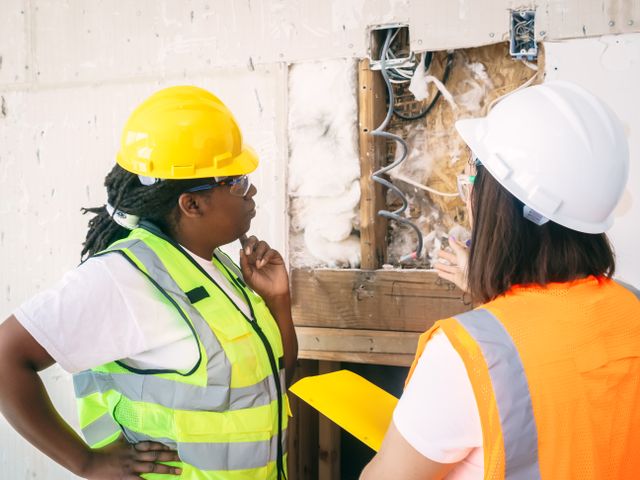
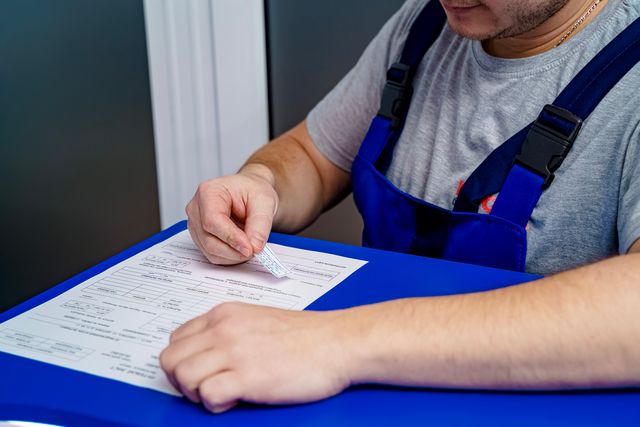
With a permitted finish, insulation is something an inspector signs off on—not just a material you buy. It gets checked before drywall goes up, which lines up with our Step 3, “Permitting & Construction: Company handles all permitting.” That inspection is your assurance the work hits the required standard and nothing questionable gets buried.
The code landscape is shifting. Denver adopted the 2024 International Code family and the 2021 IECC energy code, with city amendments, on June 13, 2025. Statewide, jurisdictions are on different adoption timelines through mid-2026, which means requirements can differ between Denver and the surrounding suburbs we serve.
We stay specific on R-values instead of tossing out a national average. Denver is in Zone 5B. To show that suburbs publish specific figures, Douglas County’s basement finish guidance requires a minimum of R-15 continuous insulation or R-19 batt in stud cavities, full height and length of basement walls and crawl spaces, with a vapor barrier. We confirm the exact Denver amendment before quoting a number for a Denver job, because your jurisdiction sets the target.
Denver’s energy code also requires an insulation certificate listing the predominant R-values installed on walls, foundation and basement walls, crawl-space walls, floors, and ducts. We handle that paperwork. Permit authorities across our service areas include denvergov.org, jeffco.us, arapahoeco.gov, adamscountyco.gov, and douglasco.gov. Framing builds the cavity, insulation fills it, and drywall closes it in, each an inspected, sequential step.
Insulation Installation Across Our Denver Service Areas
We install insulation and finish basements across all nine of our service areas: Denver, Highlands Ranch, Cherry Creek, Arvada, Broomfield, Westminster, Lakewood, Wheat Ridge, and Aurora.
Local experience isn’t a slogan. Code requirements and inspections can vary between Denver and nearby suburbs, so a team that works in all nine cities knows which target applies where—and how to pass inspection the first time. That’s Colorado craftsmanship backed by real community trust.
Insulation also plays a role beyond basements, in crawl spaces and new home additions and crawl spaces, where rigid foam is often the right choice for air-sealing. Reach out for those jobs and we’ll scope them one by one.
How Our Insulation Installation Works
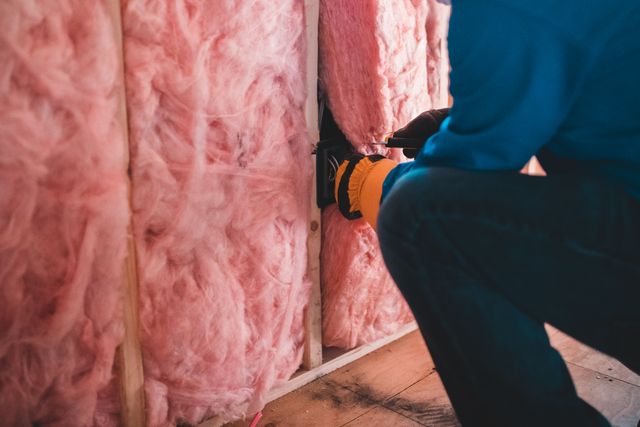
Our process is consistent and on schedule from first visit to final walkthrough, with insulation living inside the build phase.
Step 1 – Schedule Free Consultation:
A design specialist visits your home to discuss basement finishing goals, budget, and timeline. Insulation Installation in Denver CO starts here, where we explain assemblies wall by wall so you understand the reasoning behind each recommendation—not just the price.
Step 2 – Design Phase:
Our team creates a 3D rendering of the finished basement, including custom cabinetry, flooring, and lighting.
Step 3 – Permitting & Construction:
We handle all permitting and our finishers do the work.
Step 4 – Build:
Framing, drywall, flooring, and all structural work get completed, and this is where insulation goes in after framing and gets inspected before drywall.
Step 5 – Finishing Touches:
Custom paint colors, trim, crown molding, light fixtures, and appliances go in.
Step 6 – Final Walkthrough:
We walk the finished space with you to confirm you’re satisfied before we close the project.
Don’t Close Up the Wall Until the Insulation Is Right
Once drywall is up, the insulation is hidden and the inspected work is sealed behind it. There’s no easy redo—that’s the real reason to get the assembly right the first time. Insulation Installation in Denver CO done correctly the first time means no tearing out drywall later to fix a moisture problem or a failed inspection.
That’s why it pays to hire a remodeler who knows Denver basements and Front Range soils, not a single-product installer reading a script. Let us evaluate your exact wall, plan a moisture-first, properly air-sealed assembly, and carry the permitting and inspection with you from start to finish.
Get a Free Estimate · Call 303-900-4120. Denver’s Most Trusted Basement Finishing & Remodeling Pros. [Get a Free Estimate]
Frequently Asked Questions
What type of insulation is best for a Denver basement in a cold climate?
Denver sits in IECC Climate Zone 5B, a heating-dominated climate where basement-wall insulation and air-sealing drive both comfort and code compliance. A trusted approach here is rigid foam board installed against the concrete foundation wall for a continuous thermal break, with an insulated stud cavity built behind it. The right material and assembly depend on the specific wall, so we plan it during your free consultation rather than pushing a single product.
Will insulating my basement cause moisture or mold problems?
Insulation itself doesn’t cause moisture problems, but the wrong assembly against concrete can trap it, which is a common and valid concern among homeowners. That is why we favor a rigid foam thermal break against the foundation wall with a stud cavity behind it, so the assembly can perform without trapping moisture. Insulation is not waterproofing, so any bulk-water issues must be solved first before the walls are closed up.
What R-value do I need for basement walls in Denver?
Denver is in Climate Zone 5B, and suburban jurisdictions publish specific requirements that can differ from the city itself. For example, Douglas County lists a minimum of R-15 continuous or R-19 batt in stud cavities, full height, with a vapor barrier as an illustration of how suburbs spell out numbers. Because requirements vary across our nine service areas, we confirm the exact amendment that applies to your address and job before finalizing the assembly.
Does insulation installation require a permit or inspection?
In a permitted basement finish, insulation is an inspected step that is checked before drywall closes in the wall. We handle all permitting as part of our Permitting & Construction stage, and code adoption can differ between Denver and surrounding cities such as Arvada, Broomfield, or Aurora. Working with a remodeler experienced across all nine service areas helps make sure the insulation passes inspection the first time.
When does insulation happen during a basement finish?
Insulation Installation in Denver CO happens during the build stage, after framing creates the wall cavity and before drywall closes it in. It is one sequential step inside the larger finish, though it can also be done as a standalone scope when that is all you need. A full basement finish includes insulation along with framing, drywall, flooring, and the finishing touches that follow.