
Selected product and fabrication
The selected product, edge profiles, seams and cutouts determine fabrication.
DENVER BASEMENT FINISHING PROS
Quartz countertops can give a kitchen a consistent color palette, a quiet background or a bold veined surface. The important choice is the specific product and layout, not simply the word quartz. Finish, pattern scale, seams and support all affect what you see and use after installation.
Planning quartz countertops in Denver means coordinating the surface with cabinets, sinks and appliances before fabrication. A countertop that looks right in a sample should also provide the workspace, cleaning routine and practical details your household needs. Start with those priorities before committing to a slab design.
PLANNING YOUR INVESTMENT
A project-specific estimate should reflect the agreed scope and material selections.
The selected product, edge profiles, seams and cutouts determine fabrication.
Cabinet leveling, supported overhangs and sink details need coordination.
Access, old-surface removal and final fitting complete the installation.
Discuss your property and the work you want to complete.
Request an estimate01 / Quartz Countertops
List the activities that occupy the counter most often. Preparing meals, baking, making coffee and serving guests may compete for the same space. A larger sink or a countertop appliance can take away preparation room unless the layout makes a deliberate place for it.
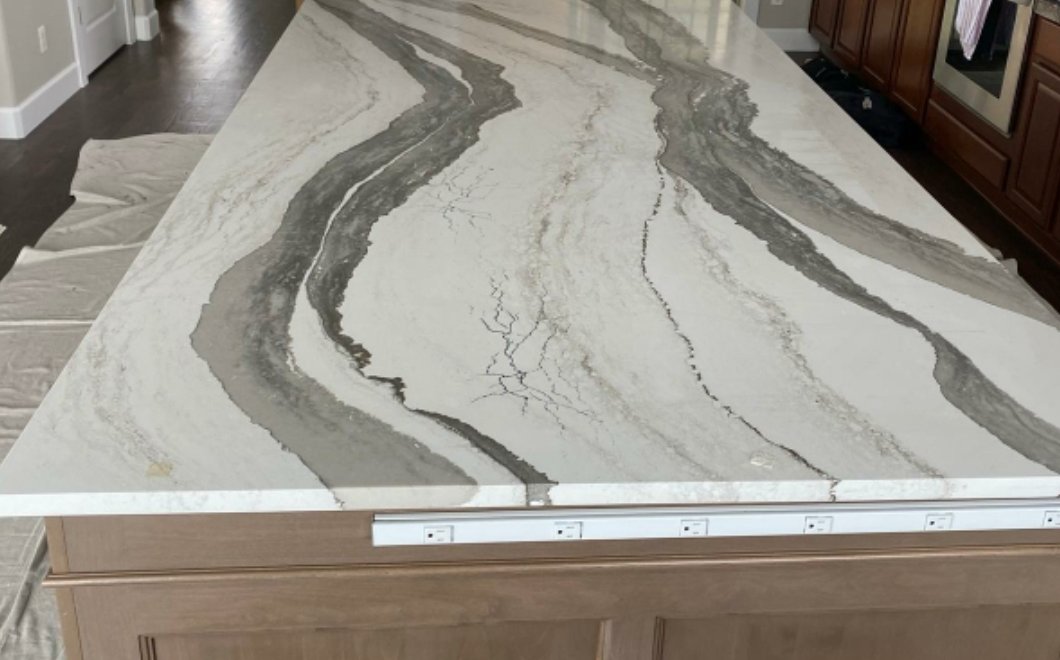
Consider the visual role of the countertop at the same time. Fine patterning may sit comfortably beside a detailed backsplash, while broad veins can become the main feature of an island. Look at the chosen design across a full slab image or display, not only a small sample with one attractive detail.
Bring the cabinet finish and nearby flooring into the review. A white surface can have undertones that become noticeable beside another white material. Compare the samples in the room's normal light and under the task lighting you intend to use. A photograph on a screen is useful for narrowing choices, but it should not be your only color reference.
If you are comparing quartz countertops in Denver with granite countertops, distinguish the manufactured product from the individual natural slab. Both need a thoughtful layout, but their appearance, finish options and care instructions should be evaluated separately.
02 / Quartz Countertops
Quartz surfacing and quartzite are different countertop materials. Quartz surfacing is manufactured, while quartzite is natural stone. Similar names do not establish the same maintenance routine, fabrication requirements or suitability for a particular installation.
Keep the manufacturer's name, collection, design, thickness and finish attached to every selection. A quotation that only says white quartz leaves important choices unresolved. The specific product information also matters when you ask about stain removal, repair or future matching.
Do not assume that every manufactured surface sold beside quartz has the same composition or care requirements. Product categories continue to develop, and a showroom may display several different surface technologies together. Ask for the technical and care documents for the exact product you intend to buy.
This distinction is especially important when an interior design is extended outdoors. Indoor quartz should not be assumed suitable for an outdoor kitchen. Any exterior use needs explicit approval for the product and application, along with a separate review of exposure and installation conditions.
03 / Quartz Countertops
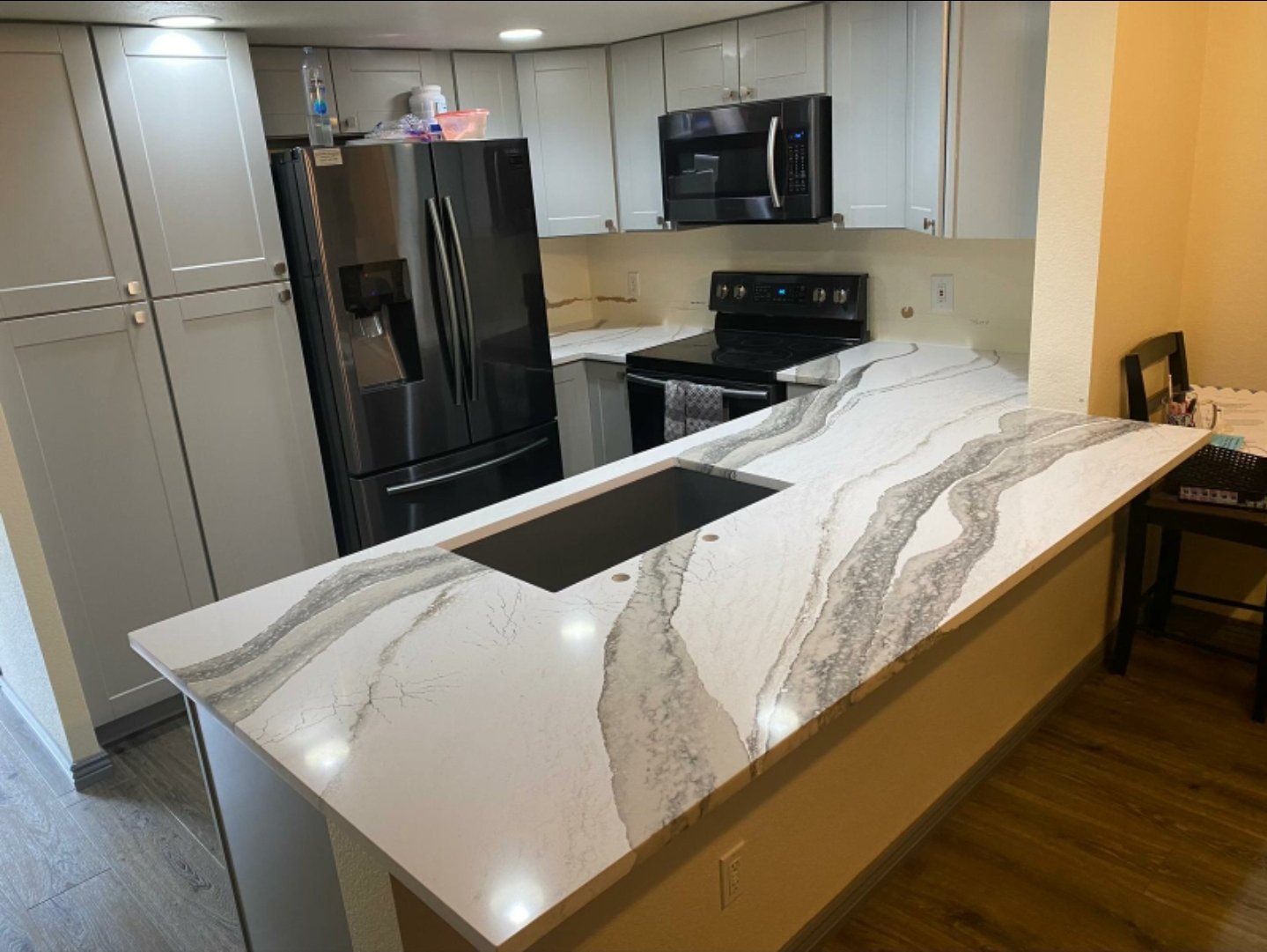
A polished finish reflects light differently from a matte or textured finish. The choice changes the way fingerprints, water marks and surface residue appear. Ask to see the finish in an installed-size display if possible and discuss the manufacturer's cleaning instructions before deciding.
A quiet solid color can make certain marks easier to notice than a more varied pattern. That is an appearance consideration, not a reason to expect a countertop to arrive without care requirements. Think about whether the surface will be used near a bright window or beneath lighting that emphasizes reflection.
Avoid choosing a finish on the assumption that it can be polished into another finish later. Field alteration may change the appearance and can conflict with product instructions. Settle the intended finish before fabrication and keep an approved sample for comparison within the manufacturer's stated variation limits.
Quartz countertops in Denver should be selected for normal household use rather than a showroom photograph alone. Consider who cleans the kitchen, which products are already used and whether those products are suitable for the new surface.
04 / Quartz Countertops
A manufactured pattern does not make a countertop seamless. Countertop dimensions, slab sizes, handling access and cutouts can require multiple pieces. Veins may change direction or appearance across a joint even when the pieces come from the same design.
Ask for a layout showing the main pieces and proposed seams. On a veined design, review how the pattern approaches the sink, crosses the island and meets a backsplash. Rotating a piece can change the composition substantially. A waterfall end creates an additional visible relationship between horizontal and vertical surfaces that deserves its own review.
For a large island, confirm more than the nominal slab dimensions. The usable slab area, edge treatment, required cutouts and safe delivery route all influence the result. A single-piece goal should be discussed early rather than added after the fabrication plan is complete.
Review the seam expectations in ordinary room lighting. The objective is a well-planned joint, not an unsupported promise that no joint will be visible. Keep the accepted layout with your selection records so later changes can be considered against a clear starting point.
05 / Quartz Countertops
Quartz requires a suitable supporting installation. The thickness you see at the front edge does not by itself establish what lies beneath the surface or how far it can extend beyond the cabinets. A built-up edge can create a thicker appearance without making every part of the top equally thick.
The fabricator should review seating overhangs, appliance openings and transitions between supported and unsupported areas. Support details need to suit the selected product and layout. Plan brackets or other supports before installation so they do not conflict with knees, drawers or the intended appearance.
Existing cabinets should be checked for stability, alignment and damage. New cabinets need to be in their final positions before the final countertop measurements are approved. If a cabinet must be moved after templating, have the effect on the countertop reviewed rather than assuming a small adjustment is harmless.
Check the finished height where the counter meets a range, window ledge or adjacent surface. These relationships are easy to overlook when the discussion centers on color. Resolving them in advance can prevent awkward gaps and changes that affect more than the countertop itself.
06 / Quartz Countertops
A countertop drawing depends on specific fixtures. Sink size, mounting type and faucet placement should be settled early enough to check them against the cabinet interior. The opening needs to match the actual model and mounting requirements, not a generic description.
Gather the following details before approving fabrication.
A deep sink bowl can affect the space below the counter. A tall faucet may have clearance issues at a window or shelf. A cooktop has installation requirements that extend beyond the visible hole. Have the responsible providers resolve these relationships before the final drawing is released.
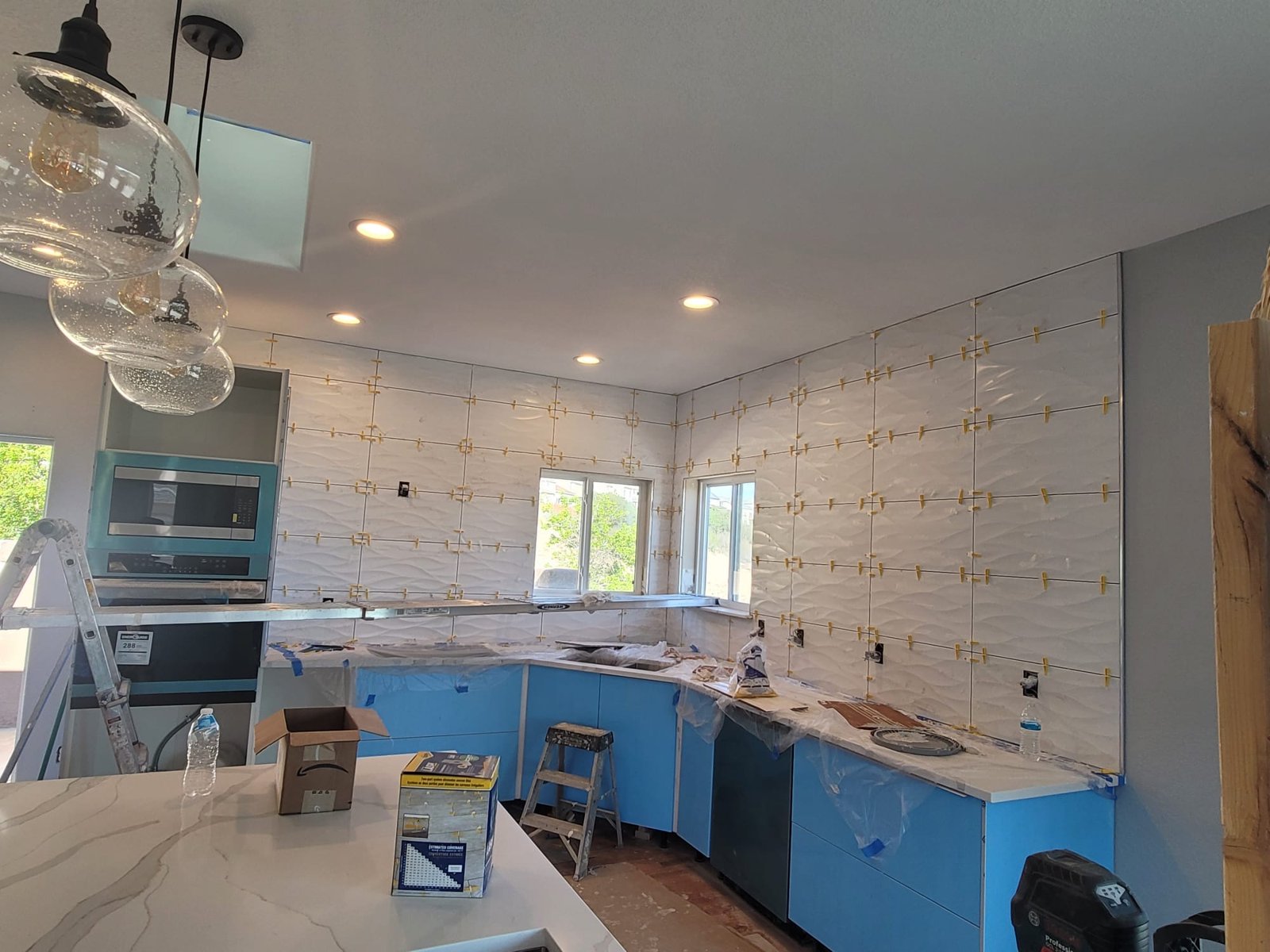
If the room is undergoing broader kitchen remodeling, coordinate the countertop schedule with cabinet completion, appliance availability and backsplash work. The final measurement should describe the kitchen that will actually receive the stone.
07 / Quartz Countertops
Confirm who removes the old countertop and disconnects plumbing or appliances. Ask whether wall repair, disposal and reconnection are included in the agreed scope. These surrounding jobs can determine when the kitchen becomes usable even after the new surface is in place.
Clear the countertops and any cabinets the installers need to access. Establish a delivery route and discuss stairs, tight corners or other handling constraints. Protect nearby belongings as agreed and keep children and pets outside the work area.
Make a temporary plan for meals and washing up while the sink is unavailable. Do not base that plan on an assumed universal installation duration. Material readiness, cabinet conditions and the coordination of related work determine the sequence for the individual project.
Any cutting or adjustment of stone surfaces should be handled by appropriately equipped professionals using suitable dust controls. Do not attempt to trim an installed countertop with household tools. If something does not fit, stop and have the cause assessed before further work changes the opening or surface.
08 / Quartz Countertops
Low-maintenance does not mean damage-proof. The Cambria product care guide illustrates important distinctions for that manufacturer's quartz, including no routine sealing, precautions around heat and the possibility of visible seams or edge chips. Use the guidance for the product you select rather than transferring instructions from a different brand.
Wipe spills promptly with an approved cleaning method. Use a cutting board and a suitable trivet or heat barrier as directed for hot cookware and heat-producing countertop appliances. Do not assume an appliance is harmless to the surface merely because it has small feet beneath it.
Before trying an abrasive pad or strong cleaner on a mark, check the care guide. Some treatments can change the finish or leave residue that is harder to remove than the original spill. If a mark remains, identify the substance and ask for a product-specific recommendation.
At completion, retain the design name, installation documents and care instructions. For quartz countertops in Denver, those records make later maintenance questions easier to resolve and help distinguish a product issue from damage or residue requiring a different response.
09 / Quartz Countertops
A complete proposal should identify the selected material, thickness, finish and fabrication details. Compare edge profiles, seams, cutouts, support work and backsplash scope as well as the amount of countertop. Two proposals can describe the same kitchen while including different surrounding work.
Clarify removal, delivery access, disposal, plumbing reconnection and any cabinet or wall repairs. Ask how changes after final measurement will be documented. When an undecided selection is represented by an allowance, establish what it covers before treating it as a final price.
Bring photographs, approximate room dimensions and your sink or appliance plans to a discussion about quartz countertops in Denver. A clear starting brief helps separate material selection from the work needed to make the installation fit your kitchen.
No. Quartz surfacing is a manufactured product, while quartzite is natural stone. Ask for the exact product identification and its care instructions rather than relying on the similarity of the names. A recommendation for one material should not automatically be applied to the other.
Many quartz products do not require sealing, and some manufacturers prohibit sealers or topical treatments. Follow the instructions for the exact product. Applying a treatment intended for porous natural stone can leave an unwanted surface film and does not necessarily improve the countertop's performance.
Do not assume direct heat is acceptable. Follow the product's heat precautions and use the recommended protection under cookware and heat-producing appliances. Sudden temperature changes or sustained heat can damage some surfaces. A general heat-resistance claim is not permission to ignore the manufacturer's instructions.
Not necessarily. The pattern, available slab area and layout affect how pieces meet. Ask to review the proposed arrangement before cutting, including waterfall ends and backsplashes. A coordinated layout can improve the transition, but visible pattern changes may remain and should be part of the approval discussion.
Only if the exact product is explicitly suitable for the proposed exterior application. Do not assume indoor quartz can tolerate outdoor exposure because a patio is covered. Confirm the manufacturer's limitations and the installation conditions before using the material outside.
Photograph the damage and contact an appropriate countertop professional or the product supplier for assessment. Repair options depend on the location, size, pattern and finish. Avoid filling or polishing the area yourself before it is assessed, since that can complicate the repair or alter its appearance.
LET’S TALK ABOUT YOUR HOME
Tell us what you have in mind. We’ll discuss your goals and arrange a walkthrough to understand the work involved.