
Equipment fit
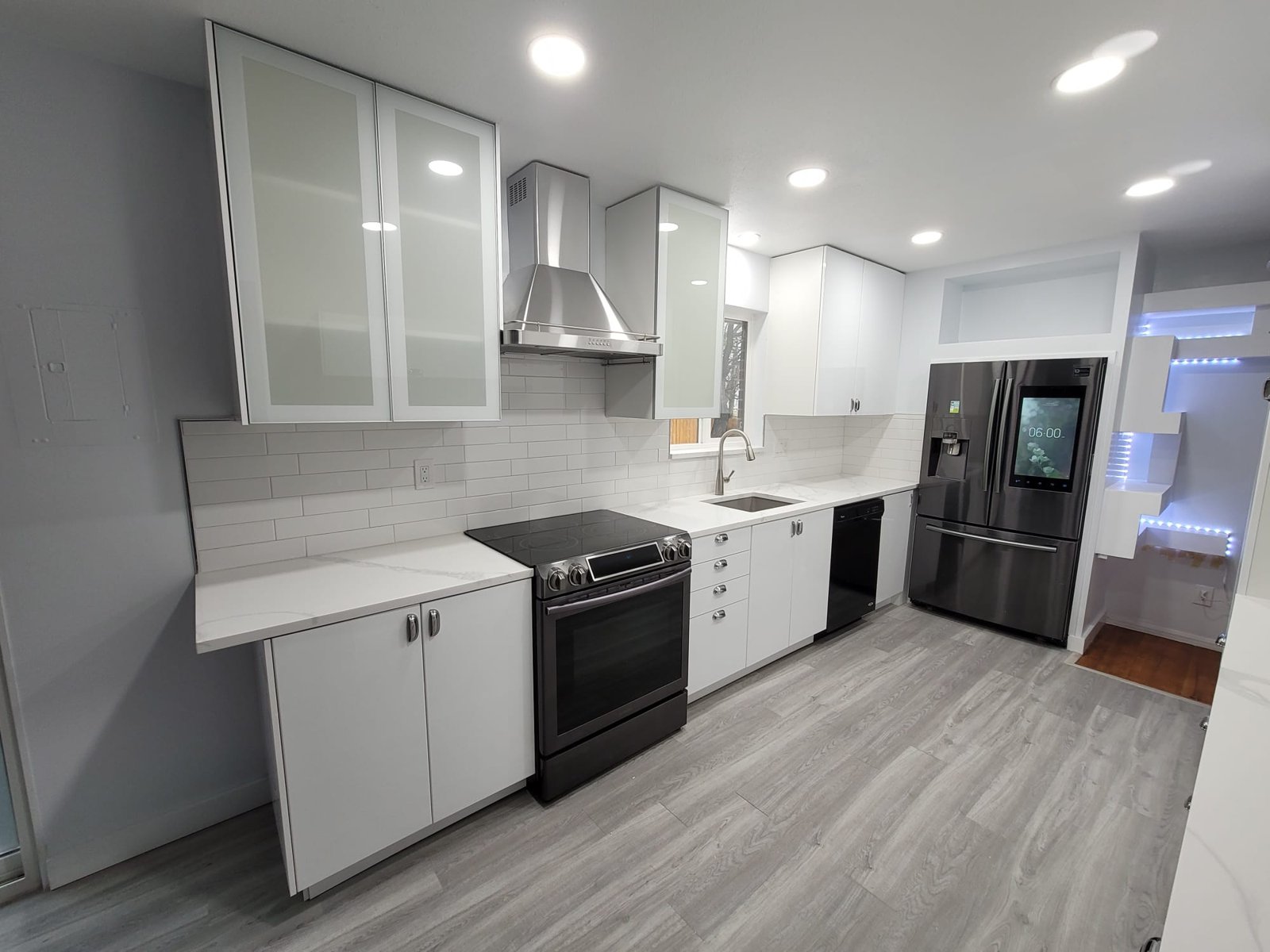
Model dimensions, door swings and cabinet openings establish the physical fit.
DENVER BASEMENT FINISHING PROS
A new appliance needs to fit the room, the utility connections and the way you use the kitchen. The dimensions on the sales page are only the beginning. Door swings, ventilation space, delivery access and the manufacturer's installation instructions determine whether the selected model can work in its intended position.
Appliance installation in Denver may be a straightforward replacement or one part of a larger kitchen project. Start with the exact model numbers and photographs of the existing openings and connections. That information helps separate installation work from cabinet alterations, countertop changes and electrical or plumbing work that needs its own review.
PLANNING YOUR INVESTMENT
A project-specific estimate should reflect the agreed scope and material selections.
Model dimensions, door swings and cabinet openings establish the physical fit.
Electrical, water, drainage, gas or ventilation requirements depend on the appliance.
Delivery access, removal and specified installation checks complete the scope.
Discuss your property and the work you want to complete.
Request an estimate01 / Appliance Installation
Delivery, installation and removal of the old appliance are separate services unless the agreement says otherwise. A delivery appointment does not necessarily include disconnecting an existing unit, altering cabinetry or connecting a new appliance. Clarify those responsibilities before planning around a fully functioning kitchen on delivery day.
Whirlpool's appliance delivery and installation guide distinguishes delivery, installation and haul-away and notes that service availability can depend on appliance type and location. Use that distinction when reviewing your own order. Another provider's published service package does not establish what is included in your project.
A useful installation scope names the appliance and its model, identifies who supplies required installation accessories and explains how existing conditions will be handled. Ask who will approve additional work if an opening or connection does not match the plan. A written answer prevents a minor-looking replacement from becoming an undefined remodeling job.
02 / Appliance Installation
Two appliances sold in the same size category can require different openings or clearances. Compare the manufacturer's installation drawing with the actual cabinet opening, including its height, width and depth. Check projections from handles, doors, hinges and rear connections rather than treating the appliance body as its complete footprint.
Keep the model number attached to every drawing and selection. A late substitution can change the work even when the replacement has a similar appearance. The correct installation manual should be available to the people preparing cabinetry, services and surrounding finishes.
Consider how the appliance will be used once installed. A refrigerator that fits between cabinets may still need additional door clearance to remove drawers. An oven door can obstruct a walkway when opened. A dishwasher beside a corner cabinet can interfere with a drawer. These are layout questions worth resolving before an appliance is ordered.
03 / Appliance Installation
The finished opening is not the only space that matters. Measure the route from the unloading area to the appliance location, paying attention to doors, turns, stairways and low overhead obstructions. Include any basement stairs if the equipment is going into a lower-level kitchen or kitchenette.
Tell the delivery and installation providers about steps, tight landings and restrictions on parking or building access. A large appliance can be difficult to maneuver through a turn even when the doorway itself appears wide enough. The provider should assess any special handling needs rather than relying on a single door-width measurement.
Prepare the route without attempting unsafe disconnections or heavy lifting yourself. Remove loose furniture, rugs and stored items that obstruct access. Discuss protection for flooring, doorframes and nearby cabinets, particularly where a finished kitchen must remain intact during a replacement.
04 / Appliance Installation
Existing connections should be reviewed against the selected appliance's requirements. Replacing an appliance does not establish that the old supply arrangement is suitable for the new model. A change in fuel type, appliance output or location can require work beyond the installation itself.
Qualified trades should assess and perform any required gas, electrical, plumbing or ventilation modifications, with the applicable approvals. Confirm who is responsible for that work and whether it must be completed before the appliance installer arrives. Do not assume a delivery crew can make those alterations.
Describe the condition of accessible shutoffs and connection points during planning. A concealed or obstructed connection can complicate the work. If a problem is discovered, have the responsible professional explain the correction and any effect on adjacent finishes before proceeding.
For Denver projects, confirm permit requirements with the reviewing authority for the actual scope. A simple equipment exchange and a project that adds circuits or relocates plumbing are different situations. Properties in neighboring municipalities must follow their own applicable requirements rather than assuming Denver's process applies.
05 / Appliance Installation
Check the refrigerator's required ventilation spaces and how its doors open beside walls, cabinets and islands. Counter-depth describes a product category, not a guarantee that every surface will align with the surrounding cabinets. Handles and doors may project beyond the cabinet face by design.
If the model has a water dispenser or ice maker, identify whether a suitable water connection exists and whether connecting it is included. Water-fed features should not be treated as automatically usable just because the refrigerator can be plugged in. Follow the manufacturer's startup and flushing instructions for the specific equipment.
Allow for future access as well as initial placement. You should be able to reach the controls and maintain the appliance without dismantling surrounding cabinetry unnecessarily. Ask how the refrigerator will be moved for servicing and whether trim or panels affect that access.
06 / Appliance Installation
A dishwasher replacement can expose differences between the original opening and the finished kitchen. Flooring added after the existing appliance was installed may change the available removal path. Measure from the current finished floor to the underside of the countertop and review the opening before ordering a replacement.
The mounting arrangement must suit the appliance and the surrounding materials. A countertop or cabinet change may affect how the unit is secured. Installation should follow the model's instructions rather than improvising fasteners into a surface that is unsuitable for them.
Review the water supply, drainage and electrical arrangement as part of the scope. The installer or relevant trade should verify the appropriate connection method and check operation after the work. Keep the cabinet area accessible for that inspection instead of replacing all stored items immediately.
07 / Appliance Installation
Ranges, cooktops and wall ovens place different demands on the kitchen. A wall oven needs a suitable cabinet opening and support arrangement. A cooktop relies on the correct countertop cutout and clearances. A range must be checked against the finished floor, surrounding surfaces and any required securing components.
Do not enlarge a countertop opening from a sales-sheet dimension alone. Final model documentation and the fabricator's requirements should guide that work. Stone, wood and other countertop materials need their own preparation, and damage to an existing surface is not automatically part of a standard appliance installation.
Ventilation deserves a separate review when cooking equipment changes. Confirm the selected hood or microwave configuration, its relationship to the cooking appliance and whether the existing duct route is suitable. Required ventilation work should be included explicitly rather than left as a finishing detail.
08 / Appliance Installation
When installation is part of kitchen remodeling, settle appliance choices early enough to inform cabinets, countertops and services. Final positioning depends on those surrounding elements. Installing equipment before the room is ready can leave it exposed to damage or require it to be moved again.
Agree on which work must be complete before delivery. Cabinet openings, finished floor levels, countertop cutouts and approved utility preparation can each affect readiness. Storage arrangements matter if an appliance arrives before those conditions are met.
A replacement in an otherwise finished kitchen needs a smaller but equally clear sequence. Establish when the existing equipment becomes unavailable, who disconnects it and what temporary arrangements your household needs. Keep essential food, dishes and everyday supplies accessible while the work area is closed.
09 / Appliance Installation
Review the appliance and surrounding finishes before normal use. Look for shipping damage, confirm doors and drawers open as intended and check that trim does not obstruct operation. Ask the installer to explain the basic checks appropriate to the model and identify any items that remain incomplete.
A successful power-on does not answer every operating question. Cooling, washing and cooking equipment have different startup instructions and observation periods. Read the owner's manual and follow its guidance before loading food, running a first cycle or preparing a meal.
Keep the model and serial information, purchase documentation, installation instructions and any applicable approval records together. Note who to contact for installation concerns and who handles product service. Those responsibilities may belong to different providers.
10 / Appliance Installation
The appliance category is only one part of the price. Access, removal of existing equipment, built-in trim, required accessories and the condition of the opening can all change the work. Utility changes and cabinet or countertop alterations should be identified separately so the estimate is understandable.
Compare proposals using the same model and scope. Check whether disconnecting, delivery coordination, installation, functional checks, packaging removal and haul-away are included. Ask how concealed damage or an unsuitable connection will be handled if discovered during removal.
For a useful appliance installation discussion, have the model numbers, room photographs and any remodeling plans ready. Describe what is being replaced and what you want to change. These details make it easier to identify the necessary preparation before committing to an installation date.
It may, but compatibility needs to be checked against the exact model and the condition of the existing installation. A similar size or appearance does not establish matching electrical, gas, water or ventilation requirements. Have any necessary changes assessed and completed by the appropriate qualified trade before connecting the appliance.
Not automatically. Review the order and service agreement for each part of the work. Delivery can mean bringing the appliance into the home without disconnecting the old one or connecting the replacement. Haul-away, accessories and built-in installation may be separate items, so confirm them before the appointment.
Choose the actual models early enough for their installation drawings to inform the cabinet plan. Ordering and delivery timing should then be coordinated with the project. Avoid finalizing cabinet openings around a general appliance size and assuming a later model selection will fit without changes.
The room, delivery route and services need to support the chosen equipment. Stair access and landings can be limiting even when the final opening works. The proposed use of the basement and any wider remodeling or approval requirements should be reviewed separately from the appliance's physical installation.
Pause the affected installation work long enough to understand the condition and agree on the repair scope. The replacement should not conceal an unresolved problem. Ask who will document the issue, arrange the appropriate repair and confirm when the opening is ready for installation to continue.
Provide the model information and keep the delivery route and work area clear. Empty the appliance scheduled for removal and arrange suitable temporary storage for its contents. Confirm access, shutoff locations and service responsibilities in advance, but leave disconnection and connection work to the authorized people performing it.
LET’S TALK ABOUT YOUR HOME
Tell us what you have in mind. We’ll discuss your goals and arrange a walkthrough to understand the work involved.